
If you are asking, “should I paint the inside of my cabinets?”, the answer depends on what is visible, the condition of the interior surfaces, and how you use the kitchen. Painting cabinet interiors can make sense, but it is not automatically part of every cabinet refinishing project.
At Cabinet Coating Kings, we look at the cabinet material and condition first. For many kitchens with solid doors and clean, sealed interiors, leaving the inside alone is a practical choice. If the interiors are visible, worn, unfinished, or part of the design, painting them may be worth adding to the scope.
When Painting the Inside of Cabinets Makes Sense
Some cabinet interiors are part of the finished look. In those cases, leaving the inside untouched can create a contrast that feels unfinished.
We usually discuss interior painting when:
Visibility is usually the simplest deciding factor. If you see the inside every day, finishing it can make the full cabinet update feel more consistent.
When You Can Leave Cabinet Interiors Alone
Painting cabinet interiors is not necessary just because the doors and frames are being refinished. Many cabinets already have sealed, laminated, melamine, stained, or factory-finished interiors that are in good condition.
If those surfaces are clean, intact, and hidden behind solid doors, leaving them alone can reduce project time, cost, and disruption.
That also means you do not have to empty and keep every cabinet empty through the coating and cure period. For a busy kitchen, that can be a meaningful difference.
Cleanability Is a Good Reason to Consider a Finished Interior
Shelves and cabinet bottoms deal with cans, dishes, cookware, crumbs, spills, and cleaning products. A smooth, intact finish is easier to wipe than rough or unfinished wood.
The New York State Department of Health guidance for kitchen cabinets recommends painting cabinet shelves and drawers with enamel and keeping them clean as part of a pest-control and sanitation plan.
That does not mean every cabinet interior needs paint. It does support the practical value of a smooth, cleanable surface in storage areas.
What Type of Coating Should Be Used Inside Cabinets?
We do not use one universal product for every cabinet interior. The right coating depends on the substrate, the old finish, how the shelves are used, and the manufacturer instructions for the selected system.
Cabinet interiors need a finish designed for repeated contact and cleaning. Standard wall paint is not our first choice for shelves because cabinet surfaces receive more handling and abrasion than walls.
Sheen also depends on the product and the homeowner’s preference. A higher sheen may be easier to wipe clean, while a lower sheen can hide surface flaws better. We match the finish to the cabinet material and how the kitchen is used.
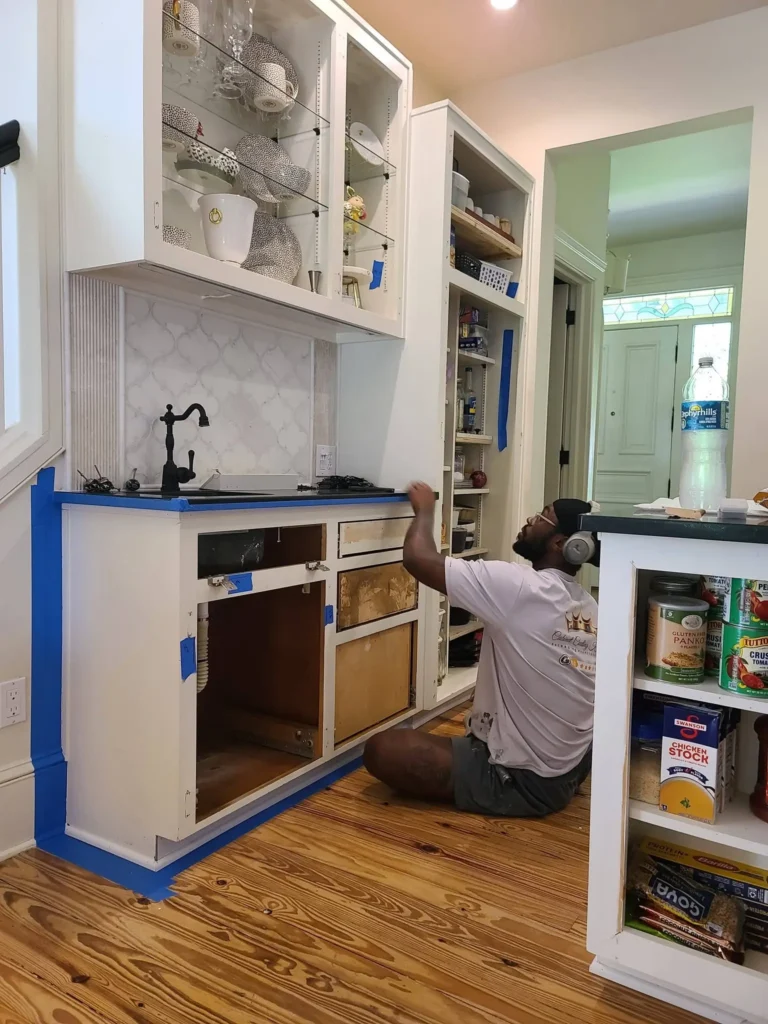
Preparation Matters More Inside a Cabinet Than Many Homeowners Expect
Cabinet interiors collect dust, cooking residue, spills, and cleaning-product film. Paint applied over contamination can have trouble bonding.
If the interiors are included, our preparation discussion covers:
Primer is not the same rule for every substrate. Our guide to when cabinet primer is needed explains why the existing surface matters.
How Indoor Conditions Affect Drying and Cure Time
Humidity, temperature, airflow, coat thickness, and the coating chemistry can all affect drying and cure time. We follow the product instructions instead of using one fixed timeline for every cabinet project.
Inside a cabinet box, airflow can be more limited than on an exposed door or drawer front. That makes it especially important to allow the finish to harden before shelves are loaded.
Our article on what affects painted cabinet durability covers how preparation, product choice, use, and indoor conditions affect cabinet finishes over time.
What About Shelf Liners?
Shelf liners are optional. If you use them after the interiors are painted, wait until the coating has reached the cure stage stated by the manufacturer.
Non-adhesive liners are easier to remove later and do not place adhesive directly against the painted surface. This can be useful under cleaning supplies, cookware, or other storage areas where you want an extra removable layer.
How We Handle Cabinet Interior Painting
At Cabinet Coating Kings, we do not assume the inside of every cabinet should be painted. Our published cabinet process notes that we normally avoid painting cabinet interiors unless the homeowner specifically requests it.
That keeps the scope focused on the surfaces that need work. If you want the inside included, we discuss the material, condition, preparation, product, added time, and cure period before the project begins.
Our current website also lists a two-year workmanship warranty for cabinet work. The exact coverage for your project should be reviewed in the estimate and warranty terms.
If you are still choosing the exterior color, our guide to cabinet color options can help narrow the direction before the scope is finalized.
Frequently Asked Questions About Painting Cabinet Interiors
Should I paint the inside of my cabinets if the doors are solid?
Not automatically. If the interiors are clean, sealed, and in good condition, leaving them alone can be a practical choice.
Should glass-front cabinets be painted inside?
They are stronger candidates because the interior is visible. The inside color can match the exterior or provide a planned contrast.
Does painting cabinet interiors add time to the project?
Yes. Cabinets must be emptied, cleaned, prepared, coated, and allowed to dry and cure before items are returned.
Do cabinet interiors always need primer?
No. Primer depends on the substrate, existing finish, repairs, and coating system. We follow the requirements for the specific surface and product.
Can I put shelf liners over newly painted shelves?
Yes, after the coating has reached the cure stage required by the manufacturer. Non-adhesive liners are easier to remove later without placing glue against the finish.
