
You have probably looked up cabinet painting prices and found a range so wide it tells you almost nothing. Some sources say $1,000. Others say $7,000. Both numbers exist for real reasons, and neither one is wrong. They are just describing very different projects on very different cabinets with very different scopes of work.
Before you call anyone for a quote, understanding what actually drives cabinet painting cost saves you from comparing numbers that are not comparable. It also helps you ask the right questions so the estimate you get actually reflects what your kitchen needs.
Cabinet Coating Kings has done this work on thousands of kitchens across the Greater Orlando area. Here is what consistently moves the price, and what you can do about it before the conversation even starts.
Quick Takeaways:
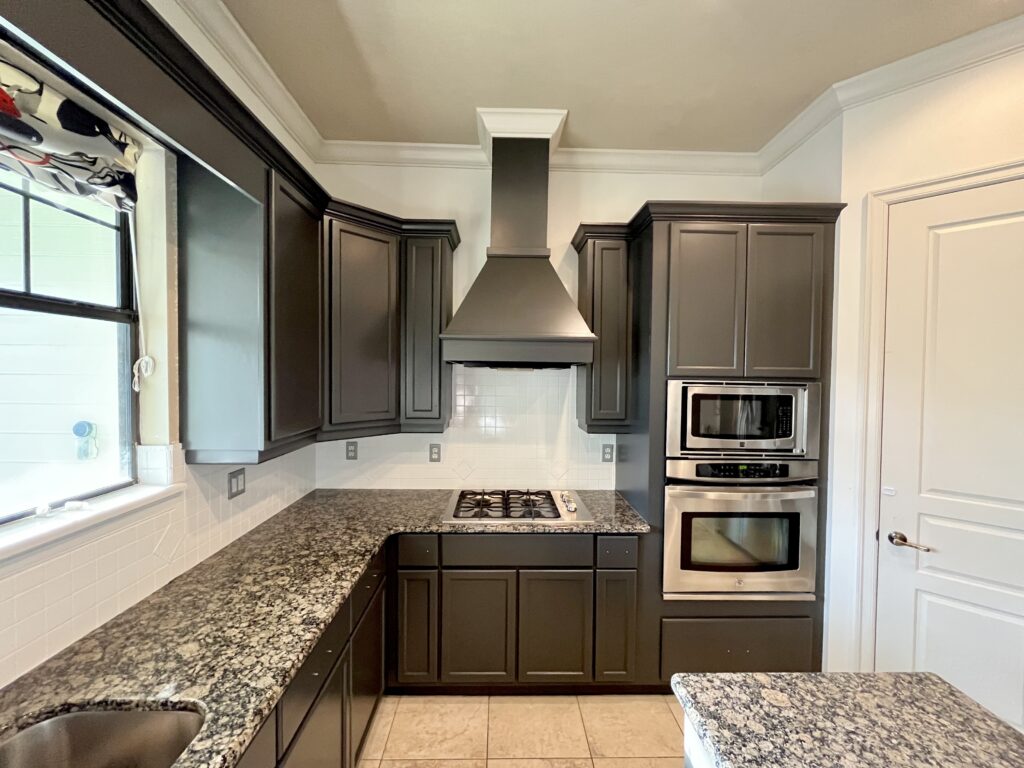
What Affects Cabinet Painting Cost the Most
There is no flat rate for cabinet painting because no 2 kitchens are the same. Painters are pricing your specific cabinets in their current condition with the finish you want. Here is what each of those variables actually means for the number on the estimate.
How Many Cabinets Do You Have and How They Are Laid Out
This is the most obvious factor, but it is worth understanding how painters actually count and price cabinet work.
It is not just about the number of doors. Painters price based on total paintable surface area, which includes door fronts, drawer fronts, cabinet boxes, frames, and any exposed interior sections you want painted. A kitchen with 20 simple cabinet doors laid out in a straight run is a faster project than one with 20 doors spread across multiple runs, islands, and pantry units.
The complexity of the layout affects how long setup, masking, and cleanup take at every stage. More corners, more transitions, and more interruptions in the run all add time, and time is one of the largest components of any cabinet painting estimate.
Cabinet Material and What It Means for Prep
The material your cabinets are made from changes how much prep work is needed before any paint goes on. Some materials take paint readily with light sanding and primer. Others need significantly more preparation to achieve a finish that holds up over time.
Here is how common cabinet materials compare:
- Solid wood is porous and accepts paint well with proper prep, but it can raise grain if not sanded correctly, which adds prep time to any project
- MDF has a smooth surface that takes paint evenly, but its edges absorb more primer and can swell if moisture gets in during prep
- Laminate requires adhesion primers and scuff sanding to create a surface the paint can actually bond to; skipping those steps leads to peeling within months
- Thermofoil is one of the more challenging surfaces and may require deglossing and specialty primers depending on its current condition
Ask your painters what prep steps they plan for your specific cabinet material before accepting any number. That answer tells you a lot about how the project will actually hold up.
Current Cabinet Condition and What Needs to Be Fixed First
This is the factor that explains most of the large gaps between estimates on the same kitchen.
Cabinets that have been cleaned regularly, have no peeling finishes, and have solid hardware and hinges are a different project than cabinets with grease buildup, previous paint failures, stripped screw holes, or damaged edges. Every repair, degreasing step, and surface fix adds time before a painter can even begin applying the product.
Knowing how to assess cabinet condition before any project starts is one of the most practical things a homeowner can do before requesting quotes. Cabinets that look fine from across the kitchen can have damage around hinges, inside frames, and at the edges of drawer fronts that requires real attention before paint goes on.
A quote that does not account for those repairs is not a better deal. It is an incomplete scope that will either cost more mid-project or produce a result that fails early.
Paint and Primer Product Selection
Not all cabinet paints perform the same, and the product choice has a direct effect on both the upfront cost of a project and how long the finish lasts after the painters leave.
Cabinet surfaces take more wear than almost any other painted surface in your home. They get touched dozens of times a day, exposed to cooking humidity, and cleaned with products that break down weaker finishes over time. A product not built for that level of daily contact will show wear within a year or 2 regardless of how well it was applied.
Research on interior paint durability from Consumer Reports shows that top-rated interior paints consistently outperform budget alternatives in scrub resistance and adhesion after repeated use. For cabinets specifically, those 2 qualities determine whether your finish still looks good in year 4 or year 7.
Sherwin-Williams Emerald Urethane Trim Enamel is formulated with a urethane-modified alkyd resin that gives it the hardness and block resistance cabinet surfaces need. It is not expensive because of the name. It is built for high-contact surfaces where standard interior paints would show wear within a few years. Using the right product from the start is part of what makes the difference between a cabinet project that looks great at year 1 and one that still looks great at year 6.
Finish Type and What It Costs to Get Right
The finish your cabinets end up with is a cost variable that most homeowners do not think to ask about upfront.
Semi-gloss and satin finishes are the most common choices for cabinet work because they clean easily and hold up to daily contact. But different finishes require different application techniques, different prep steps, and sometimes different primer products to achieve cleanly.
Our post on eggshell vs semi-gloss paint for cabinets breaks down how those finish differences affect both appearance and durability on cabinet surfaces specifically.
A spray finish also requires more setup, masking, and controlled conditions than a brush-and-roll application. Most professional cabinet painters spray doors off-site in a controlled environment to get a smooth, factory-like result. That process takes more time and equipment, and it shows up in the estimate. It also shows up in the result.
Color Change and How Much It Affects Scope
Going from a dark cabinet to a light one, or from a stained wood finish to a painted finish for the first time, adds scope to any cabinet painting project.
Dark-to-light transitions almost always require primer plus multiple topcoats to achieve consistent, opaque coverage that holds over time. The first coat of a light color over dark cabinets will look uneven. The second coat gets you closer. By the 3rd coat, the coverage is where it needs to be. That is 3 applications instead of 2, and each coat requires dry time and light sanding between applications.
Painting over a stained wood finish for the first time requires additional prep to seal the grain and prevent tannin bleed-through, which can cause a yellowish cast under light paint colors even after proper priming. Painters who know this account for it in their scope. Painters who do not will often come back for additional coats after the color shifts.
Cabinet Painting vs. Refacing: What the Cost Comparison Actually Looks Like
This is the question underneath most cabinet painting cost conversations for Orlando homeowners.
Cabinet replacement in Florida typically runs between $13,000 and $38,000, depending on the size of the kitchen and the cabinet line selected, according to HomeAdvisor’s kitchen cabinet cost data. Cabinet painting delivers a comparable visual transformation at a fraction of that cost by refreshing the existing structure rather than replacing it.
Cabinet refacing sits between those 2 options. Our cabinet refacing services cover how that process compares to painting in terms of scope, timeline, and result, which is worth reading if you are still deciding which direction makes the most sense for your kitchen.
For homeowners in Winter Park, FL, and across the Greater Orlando area, the process behind a professional cabinet painting project makes a bigger difference than most people expect. Our post on how kitchen cabinet painters refresh your kitchen walks through exactly what happens from the first day through reinstallation, which helps you understand what you are actually paying for when you compare estimates.
What to Do before Requesting Any Quotes
A few things are worth handling before you call anyone.
- Clean your cabinets thoroughly. Grease and grime that get addressed before the estimate arrives give painters a clearer picture of the actual surface condition.
- Note any existing damage. Loose hinges, stripped screw holes, delaminating edges, and previous paint failures should all be on the table so the quote reflects what the project actually involves.
- Know your color direction. Dark-to-light shifts add coats and cost. Having a general direction settled before anyone quotes keeps the scope accurate.
- Ask about the product being used. A painter who can tell you exactly which product and finish they plan to use has thought through your project. One who can may not have.
Call us at 407-917-9535 for a FREE estimate today. The team at Cabinet Coating Kings will assess your cabinets, walk you through every cost factor specific to your kitchen, and give you a clear honest number with nothing left out.
