
All in one paint for cabinets sounds like an easy way to cut a step from your kitchen update. But does the label mean you can apply it straight over glossy doors, stained oak, or a finish you cannot identify? Not necessarily. The answer depends on the cabinet material and the exact product directions.
If you are updating cabinets in Oviedo, FL, start by checking the surface rather than choosing paint based on the words on the can. This guide explains which questions to ask before you decide to skip a separate primer.
What Does “All-in-One” Actually Promise?
The phrase can describe different products. Some combine paint and primer functions, while others are cabinet coating kits with more than one component. One label does not tell you which surfaces are approved for direct application.
Read the technical data sheet and the directions for the exact product, including any notes about previous finishes, bare wood, laminate, and bonding primers. A product may promote fewer steps but still require a separate primer on certain surfaces.
The most useful question is not whether a paint has primer in its name. It is whether the manufacturer approves that paint for your cabinet surface after the preparation you are prepared to do. Sherwin-Williams explains that primers can serve different purposes, including adhesion, sealing, and stain blocking, and recommends following the specified coating system.
Start With What Is Already on Your Cabinets
Previously painted doors with a sound, compatible finish present a different challenge from glossy factory-finished cabinets. A coating that is peeling, soft, contaminated, or poorly bonded is not a dependable base for another layer.
Check corners, door edges, and areas near handles first. Those are common locations for grease, hand contact, and visible coating wear. Cabinet Coating Kings has a separate guide to assessing cabinet condition before painting if you are unsure what to inspect.
If the existing coating is failing, adding an all-in-one product over it will not restore the bond underneath. Remove or repair unsound material according to the coating instructions before moving forward.
When Can You Skip a Separate Primer?
A separate primer may be unnecessary on some clean, sound, previously painted surfaces when the new cabinet coating is compatible and explicitly allows direct application. That is a product-specific decision, not a universal shortcut.
Follow the manufacturer’s cleaning and deglossing directions, then test a small hidden area if adhesion is uncertain. Allow the test to cure as instructed before evaluating it. A test can reveal an obvious problem, although it cannot promise lifetime performance.
Our existing article about cabinet paint without primer explains the broader risks of skipping primer. Here, the focus is narrower: how to decide whether an all-in-one label genuinely applies to your cabinets.
When Is a Dedicated Primer the Safer Choice?
Glossy or slick coatings can be difficult to bond to. Laminate, factory finishes, and other low-porosity surfaces may call for a specialty adhesion primer, depending on the system and condition.
Bare wood or exposed MDF edges can absorb coating differently than a previously painted face. Certain woods may also release tannins or other discoloration that a stain-blocking primer is designed to control.
Do not assume one primer solves every issue. Confirm compatibility between the substrate, primer, and topcoat, and follow the specific manufacturer’s application directions.
The Kitchen Changes the Coating Requirements
Cabinet doors near a stove or sink receive more grease, moisture, and cleaning than a rarely used display cabinet. Those conditions make surface cleaning and coating selection especially relevant.
Oviedo kitchens can experience indoor moisture from cooking and washing regardless of outdoor weather. If there is an active leak, swollen panel, or damaged finish, address the cause before coating it.
An all-in-one product is not a substitute for ventilation, a suitable cabinet-grade finish, or regular care. For a separate discussion of finishes, read our guide to choosing paint for cabinets.
Cleaning and Scuffing Are Not Optional Just Because Primer Is
Cabinets commonly hold cooking oil, residue from cleaning products, and fingerprints around handles. Painting over these contaminants can prevent proper adhesion, even when the product advertises primer-like properties.
Clean with a method approved for the existing cabinet finish, rinse when directed, and let the surface dry. Sand or degloss only as specified by the coating manufacturer, keeping veneer and other thin surfaces in mind.
An all-in-one product may reduce the number of separate coatings needed, but it does not erase the preparation required to give the paint a stable surface.
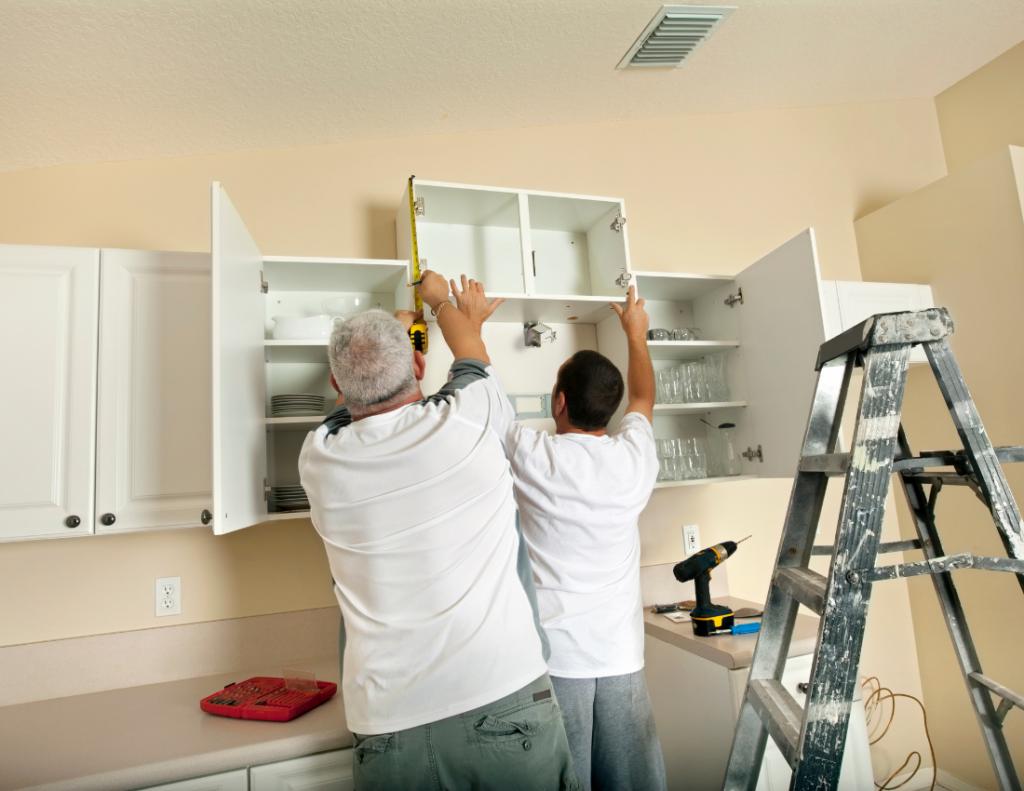
Do Not Confuse Dry-to-Touch With Ready for Daily Use
Cabinet doors and drawers contact frames, handles, and hands every day. A surface that feels dry may still need additional cure time before it reaches its expected hardness or cleaning resistance.
Check the manufacturer’s recoat, handling, reassembly, and cure instructions. These periods can differ and may change with indoor temperature, ventilation, film thickness, and humidity.
If a coating stays tacky or doors begin sticking together, do not assume another coat will help. Our article about sticky cabinets after painting explains the possible causes.
Compare the Entire Project Before Choosing the Shortcut
The number of products on a shopping list is only one part of a cabinet project. Consider cleaning, removal and labeling of doors, repairs, test areas, sanding, coating application, and the time needed before reassembly.
If the manufacturer still requires an adhesion primer on your cabinets, an all-in-one label may not save a step. If the coating allows direct application to a sound existing surface, skipping a separate primer may be reasonable.
Make the decision from the written product instructions and the condition of the cabinets, not a general promise printed on the front of the can.
How Cabinet Coating Kings Approaches Cabinet Coating Decisions
At Cabinet Coating Kings, our cabinet painting service includes surface preparation and cabinet coatings selected for the work involved. We review the cabinet condition before deciding what preparation and coating steps make sense.
For homeowners in Oviedo, FL, the first step is understanding what material and finish are already in place. A clear scope should explain the cleaning, repair, primer, and paint system rather than relying on a broad all-in-one claim.
Frequently Asked Questions
Is all in one paint for cabinets the same as a bonding primer?
No. An all-in-one paint may include primer-like performance, but a dedicated bonding primer is designed for specific adhesion needs. Check the product data sheet for approved cabinet surfaces and any primer requirements.
Can I apply all-in-one cabinet paint over stained wood?
That depends on the wood, existing clear coat, and product instructions. A glossy finish may need deglossing and a bonding primer, while stain-prone wood may need a stain-blocking primer.
Will all-in-one cabinet paint work over laminate?
Do not assume so. Many laminate finishes are slick and need a coating system specifically approved for them. Follow the manufacturer’s preparation and primer directions and test compatibility.
Does an all-in-one formula mean I can skip sanding?
Not automatically. Some coatings allow limited preparation on certain surfaces, but cleaning and any required deglossing still matter. Follow the exact product instructions rather than the front-label claim.
How soon can I use cabinet doors after painting?
Dry-to-touch, recoat, handling, and full cure times are different. Use the product’s stated instructions for reassembly and normal use, and allow extra time when conditions slow curing.
