
Knowing when to replace vs paint cabinets in Orlando is something many homeowners wrestle with before spending money on a quote. Some kitchens look rough on the surface but paint up beautifully, while others have damage no coat of paint can fix.
The real question is not how tired your cabinets look. It is how sound the boxes underneath are, because solid cabinets can be refinished for a fraction of what replacement costs.
Key Takeaways:

The Most Important Distinction: Surface Damage vs. Structural Damage
When homeowners worry about cabinets too damaged to paint, they are usually picturing something extreme. In reality, the line between paint it and replace it comes down to one question: are the cabinet boxes themselves still structurally sound?
Surface damage lives on the outside of the cabinet. Scratches, faded finish, peeling paint, old stain, worn edges around hardware, and minor discoloration all fall into this category. A skilled refinishing process strips the old finish, prepares the surface properly, and applies a factory-quality coating that makes those issues disappear.
Structural damage is a different story. If the boxes are warped, cracked, or rotting from water damage, no repair will hold long-term. Paint does not fix a frame that is no longer square, and it does not restore wood that has gone soft.
Applying a fresh finish to compromised boxes is like putting new tires on a car with a cracked frame. It looks better from the outside, but the underlying problem has not changed. This is the distinction that separates a worthwhile project from money spent on something that will not hold up.
6 Warning Signs That Your Cabinets May Be Too Damaged to Paint
Here are the specific things that actually disqualify a set of cabinets from painting. If you notice any of these, a conversation about replacement or the cabinet refacing process makes more sense than a paint job.
1. Soft or spongy wood when you press on it. Run your fingertips firmly along the bottom panel inside your base cabinets, especially under the sink and dishwasher. Wood that gives or feels soft has absorbed water and may be rotting, and once rot sets in, the material sags and crumbles past the point of repair.
2. Frames that sag, shift, or pull away from the wall. Open the doors and examine the box from the inside; if shelves sag under normal weight, boxes pull away from the wall, or frames creak, that is structural trouble, not just age. A sagging frame cannot be corrected through refinishing, because the wood has lost its ability to hold its shape.
3. Significant warping or swelling. This is the most common problem in Central Florida, and the water damage behind it is typically irreversible. Once wood swells and warps, doors drag, gap unevenly, or will not close flush, and when that shows up across multiple base boxes near plumbing, the cabinets are usually past painting.
4. Active mold or widespread rot. A small patch of surface mold that wipes clean is one thing, but mold worked into the grain, or rot that has made a section crumbly, puts the cabinet past what paint can fix. When it covers a large area, replacement is usually the better path, and widespread mold also affects indoor air quality, which makes it a health issue too.
5. MDF or particleboard boxes swollen beyond repair. Many builder-grade Orlando homes from the 1990s through the mid-2000s use MDF or particleboard boxes, and unlike solid wood, swollen MDF does not contract. The fibers stay permanently expanded and the material distorts in place, so if the faces are bowed or the edges have crumbled, those panels usually need refacing or replacement before any coating.
6. Delamination that cannot be reglued. Delamination happens when the adhesive holding the veneer, laminate, or thermofoil to the core breaks down. Minor edge delamination can often be reglued and prepped, but if it is peeling across large sections and the core underneath is compromised, the doors or panels usually need replacing before a coating goes on.
Why Orlando Homeowners Run Into This More Often
Central Florida’s climate is genuinely hard on cabinetry. Orlando homeowners deal with heat, moisture, and seasonal humidity that stress cabinet doors, finishes, and box construction year-round. The constant swing from humid outdoor air to dry, air-conditioned indoor air works on cabinet materials daily, so wood expands and contracts, finishes crack, and joints loosen.
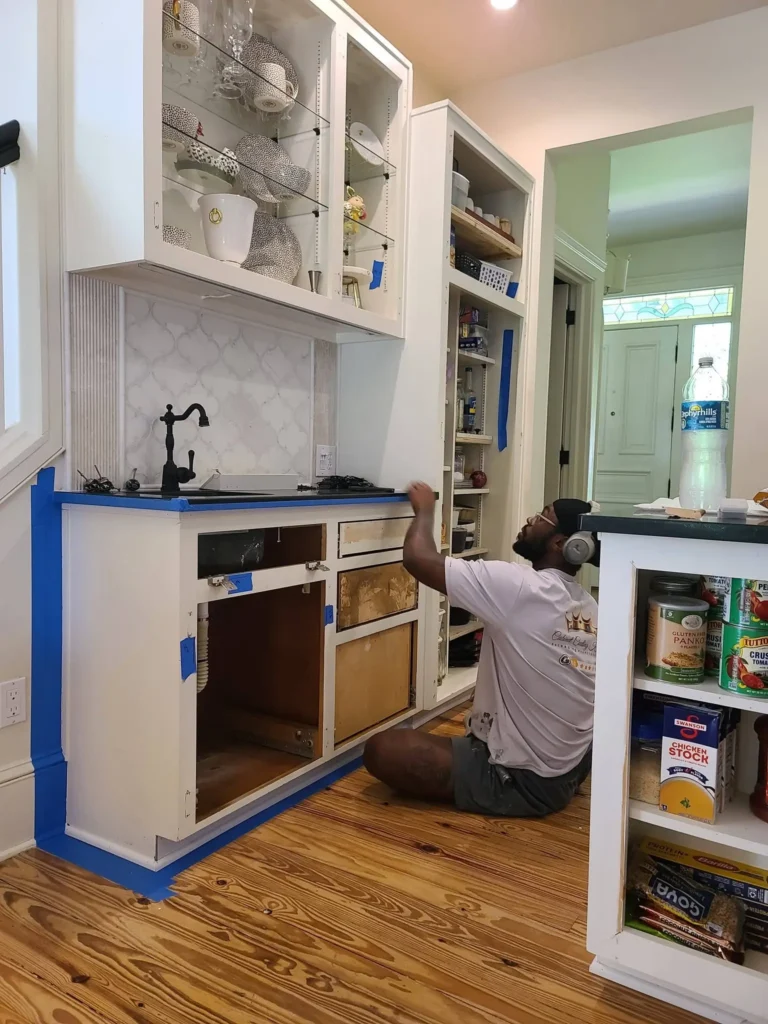
That heat-and-humidity combination is one of the most common reasons Orlando homeowners end up with cabinets too damaged to paint before they saw it coming. In a humid environment, cabinet wood swelling is almost inevitable if the cabinets are not sealed well or built with moisture-resistant materials. Particleboard and MDF, common in builder-grade cabinets, are especially vulnerable.
According to EPA guidance on moisture and mold, indoor humidity should stay below 60%, ideally between 30% and 50%. Without proper ventilation and dehumidification, wood cabinets absorb ambient moisture, which leads to swelling and warping. Many kitchens in Windermere, Lake Nona, and Sanford built with basic box materials are now at the age where moisture has done real damage, especially under sinks and near dishwashers.
This does not mean every older Orlando cabinet is a write-off. Solid wood frames, plywood construction, and properly sealed MDF often hold up well and make excellent candidates for professional refinishing. It means the assessment step matters, and skipping it can waste money in either direction.
For more on how Florida’s environment affects painted cabinet finishes, are painted cabinets durable breaks down what holds up and what does not in Central Florida homes.
Signs Your Cabinets Are Good Candidates for Painting
Most worn or dated cabinets are not cabinets too damaged to paint. Here is what a healthy-but-tired cabinet typically looks like:
A worn finish is a surface problem, not a structural one, which makes it a strong candidate for cabinet refinishing. If your cabinets match most of that list, there is a good chance painting is not only possible but financially worthwhile.
Our post on how to assess cabinet condition before painting walks through a room-by-room checklist you can use before calling anyone. It takes about 10 minutes and gives you a much clearer picture of what you are working with.
The In-Between Cases: Minor Damage That Can Be Prepped
Not every problem falls neatly into fine or too damaged. Many cabinets land somewhere in the middle, and that is where professional prep work makes the difference between a job that lasts and one that fails within a year or two.

Minor surface water staining, small areas of soft wood on a door face (not the box itself), loose joints that can be reglued, and light edge delamination are all things an experienced team can address during prep. If the wood beneath is still structurally sound, meaning not badly swollen or deteriorated, a professional can sand down failed finish, repair minor issues, and refinish to a clean result.
The phrase that matters is structurally sound. Cabinet refinishing is cosmetic; it does not fix warped or damaged boxes. When prep addresses surface damage on a solid frame, the results hold up, but when someone paints over real structural damage, the finish fails and the homeowner spends more to fix it later.
A Quick Self-Check Before You Call
Before scheduling a visit, walk through your kitchen and spend 10 minutes looking at the following:
If you find soft spots, active rot, widespread mold, or frames that have visibly shifted, those are signs your cabinets may be too damaged to paint without structural repairs first. If the issues are cosmetic, painting is very likely a smart option worth getting a quote on.
What It Costs to Paint vs. Replace
The financial gap between painting and replacing is real. Painting a kitchen’s cabinets in Orlando averages about $1,118, with most projects landing between $415 and $1,843, depending on kitchen size, paint type, and prep work.
Cabinet replacement runs far higher, from a few thousand dollars for basic stock cabinets to $30,000 or more for custom work. That gap reflects how much value a well-executed paint job delivers when the cabinet structure is sound.
That savings only holds when the boxes are genuinely worth painting. Painting cabinets that are too damaged simply delays the replacement conversation and stacks the cost of a paint job on top of it. Getting an honest assessment first protects you from that outcome.
For a full look at the numbers behind painting, refacing, and replacing, our refacing vs replacing kitchen cabinets post covers the comparison in detail.
Get a Straight Answer Before You Decide Anything
If you have been looking at your kitchen and wondering if those cabinets are worth painting or past the point of a good outcome, the right move is a professional opinion before you commit to either path. Cabinet Coating Kings serves Lake Mary, Oviedo, Lake Nona, Winter Park, Windermere, Winter Garden, Longwood, Sanford, Kissimmee, and communities across the greater Orlando area, Monday through Saturday, 7 AM to 8 PM.
Owner Alex Corral and the team will inspect your cabinet boxes, door faces, and the areas most prone to damage before giving you a clear recommendation. If your cabinets are good candidates for painting, you will hear that along with a detailed quote. If structural prep is needed first, they will walk you through it, and if replacement genuinely makes more sense, they will say so rather than take on a job that will not hold up.
Every completed project is backed by a 2-year workmanship warranty, so the recommendation they give is one they stand behind. Schedule your free consultation today and get the honest assessment your kitchen deserves. When you are ready, contact Cabinet Coating Kings at 407-917-9535.
